Sunday, February 19, 2023

Why dark energy that forms in black holes could interact with dark matter?


Molecules and hadrons are entirety. Atoms and quarks reflect radiation. But also bonds between those particles are reflecting wave movement with a frequency that is the same as their diameter. Also, electrons reflect wave movement that hits them. The reflection happens through superstrings that form the elementary particle. 

And if the length or state of those strings is different. That means the elementary particle transforms wave movement to a new frequency. Or because the state of energy level in those strings is individual. Every single superstring has its unique frequency. 

Those particles are transforming impacting energy to multiple frequencies. So the information that hits particles scatters in multiple states. And that means there is a possibility that we just haven't been able to search the dark energy from the right frequencies. 

Is the source of dark energy in gluons or gluon channels? That is transmitting the strong nuclear force? So gravitational waves can stress those channels. And that forms energy that is hard to see. If the black holes are the source of dark energy we must ask: does dark energy come straight from black holes or is there some transformation particle that transforms gravitational waves to dark energy? The fact is that a black hole can act like an elementary particle. And it can send radiation that is unknown to us. 

First, we must realize one thing. The theory of black holes as the source of dark energy is not closing the existence of dark matter. In that model, gravitational waves play a key role in the dark energy. When energy hits molecules and particles. Their energy level rises until it's higher than the environment. When energy or wave movement impacts molecules. Their atoms reflect that wave movement. But also chemical bonds between atoms send wave movement in their frequency. That depends on their diameter. So if energy travels straight out from those bonds that energy is hard to detect. 

Same way when energy hits to hadron like the proton and neutron it reflects that radiation as an entirety. But also quarks and bonds between those quarks are reflected. The reason why we cannot see radiation that comes from for example gluons or channels between quarks is that gluons are so small particles. They send radiation that wavelength is the same as their size. So that's why we cannot see that radiation quite easily. 

And that causes an idea that dark energy is wave movement that comes from some point if the atom that we just notice it. There is a possibility that gravitational waves are interacting only with strings between atoms that form molecules. 

Or maybe that reflection happens from inside a proton or neutron where gravitation interacts with gluon channels or gluons that are traveling between quarks. When that energy hits the gluon sends it through an energy channel between it and the quark. But a little bit of that wave movement travels straight out from the atom. 


There are two versions of how gravitational waves can form dark energy. 


1) Energy can transform in some particles. So when the gravitational wave hits some particle or particle's substructure that structure modifies its frequency. 

2) Black holes and their gravitational waves themselves are the sources of dark energy. That means dark energy is antigravitation. 


1) Gravitational waves can impact something. That is turning that extra gravitational energy into dark energy. So dark energy forms when some yet unknown particle transforms the wavelength of gravitational waves. Those particles can be "real particles". Or they can be virtual particles like small gravitational tornadoes. 

Sometimes individual superstring of electrons is introduced as the source of dark energy. In that case, when gravitational wave impacts the superstring which acts like a guitar string and sends wave movement around the universe. 


2) Gravitational waves can themselves be dark energy. In that model, the gravitational wave that travels in the opposite direction can form a situation where gravitation turns to repel objects. 

Black holes send gravitational waves all the time. That thing forms the model where black holes are like outwards traveling gravitational waves. And that means the event horizon is moving all the time. So that thing makes an interesting model of the gravitation around extremely massive objects. 

When gravitational waves travel out of the black hole. They are forming a vacuum behind them. That vacuum pulls objects into the black hole. Just in the middle of a black hole is the point where gravitational waves are forming statues or standing gravitational waves. 

When particles and wave movement are falling to the black hole's center. They are stuck to that gravitational statute called a singularity. There is the possibility that gravitational waves are forming closer to the event horizon. The requirement for that thing is a standing gravitational wave. 

When a gravitational wave travels out from a black hole it loses its energy. A black hole pulls also those waves back in. Or otherways all times when those outwards traveling gravitational wave impacts incoming particle and releases their energy to that particle. And in the point of the event horizon, its strength is dropped and it starts to let information travel through it in both directions. 

The energy level of the singularity increases until it turns higher than the energy that travels into the black hole. When the energy level of the black hole's center rises high enough it sends a gravitational wave. The power of a gravitational wave must be high enough that it can break the pull of a black hole. 

When those gravitational waves are impacting the point called the event horizon. Their energy turns lower. That energy impacts particles that are close to an event horizon. 


https://informationnevervanishes.blogspot.com/

Saturday, February 18, 2023

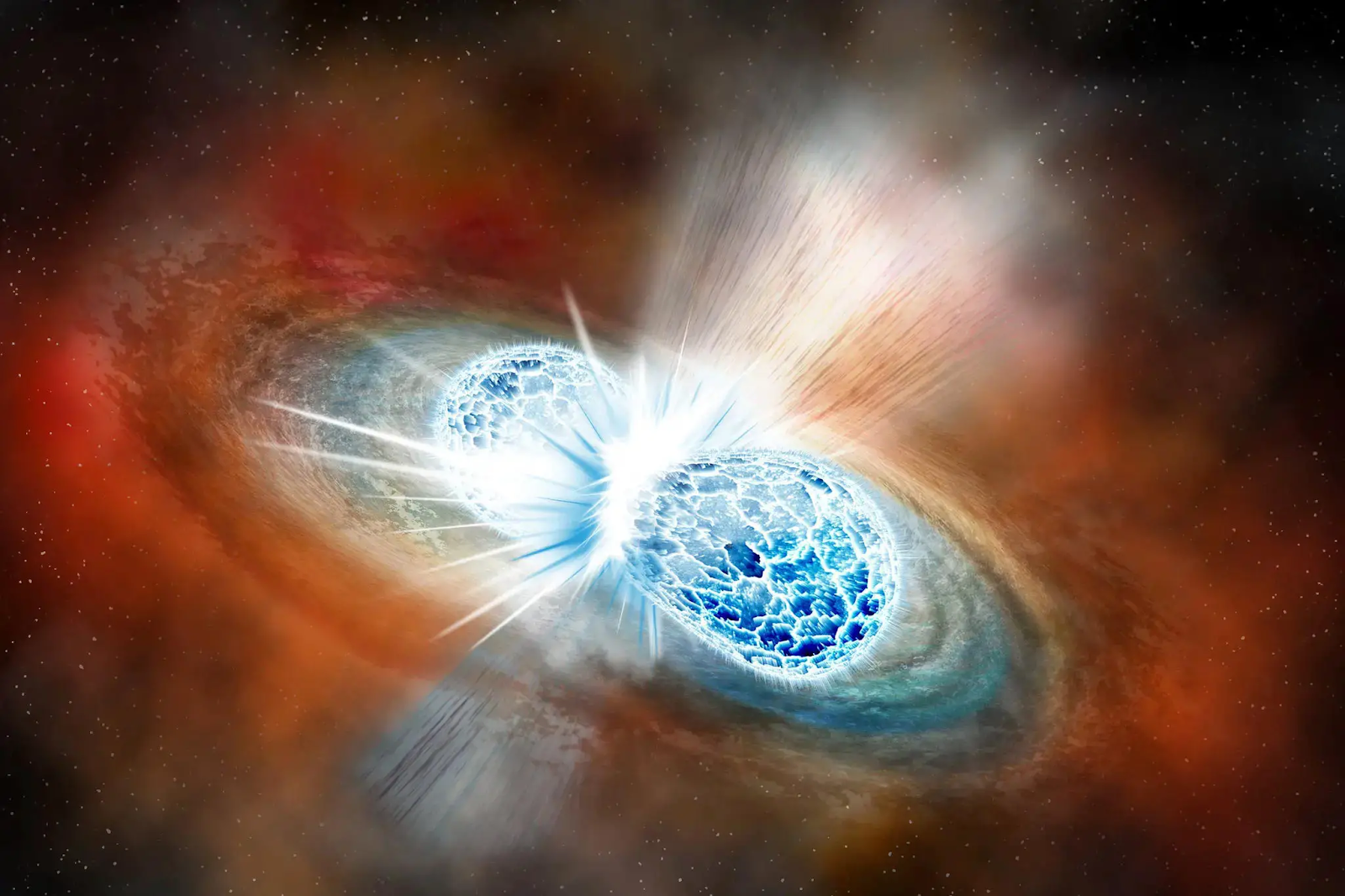
The tunneling effect can also explain the mysterious spherical kilonova.


When neutrons are impacting, that causes an effect called neutron fusion.  


It's possible that when high-speed neutrons impact. When another neutron's north pole is against another neutron's south pole. That causes an impact even if the speed of those particles would be low. But those particles' impact speed in colliding neutron stars is very high. In some models impacting neutron stars form neutron vapor when their interaction pulls particles off their shells. 

The impact speed of those neutrons is high. That thing turns them into energy. That kind of neutron fusion is possible in high energy and strong gravitational environment. That means the impacting neutrons between neutron stars could form the spherical energy impulse. 

When neutron stars collide they turn the opposite poles against each other. That thing causes an extremely strong electromagnetic effect. That effect loads energy to neutrons that are starting to act like ions. Neutrons with a high energy load make it possible. Neutrons start to act like ions. Three quarks are forming neutrons. 

And when the neutron's energy level starts to rise the tip quark collects energy. Then two other quarks transmit energy to the neutron's sides. That thing makes it possible. That a neutron can push another neutron away from its route. 

The neutrons can tunnel through material like ions. And when they stop they are sending energy impulses. So if the tunneling neutrons stopped just in the middle of the neutron star. That could form the mystery spherical energy impulse from kilonova. 

In some models, when neutron stars collide. Those neutron stars are forming liquid. There is a layer of neutron liquid under the shell of the neutron star. The thickness of that material depends on gravity. So in high-mass neutron stars that material is extremely thick. And that makes the neutron star's shell's speed in comparison with its nucleus lower than low-mass neutron stars. And the name of those things is magnetars. 

If the neutron star has a very low mass. There is a possibility that the neutron fluid is like gas between the nucleus and its shell. That allows the small-mass neutron star's shell rotates at a very high speed if we compare that with the rotating speed of the nucleus. That makes its magnetic field very strong. 

And that makes low-mass neutron stars objects called magnetars. There is the possibility that some magnetar's shell hovers above neutron gas. And that can form the most powerful magnetic fields in the universe. 

When that kind of neutron star or magnetar faces another neutron star that breaks its shell. The neutron fluid or neutron gas travels to heavier neutron stars. Because the electromagnetic energy level in bigger neutron stars rises, that causes a situation the distance between neutrons increases. 

And that creates a situation in that neutrons can tunnel through the neutron structure. When those neutrons stop in the middle of the neutron stars they send radiation. That means neutrons have a similar form as ions. 


https://www.sciencealert.com/colliding-neutron-stars-created-a-sphere-so-perfect-its-shocked-physicists

https://scitechdaily.com/astrophysicists-discover-a-mysterious-perfect-explosion-in-space-it-makes-no-sense/


https://astronomyandtechnology.blogspot.com/

Are there rivers and lakes in other worlds?


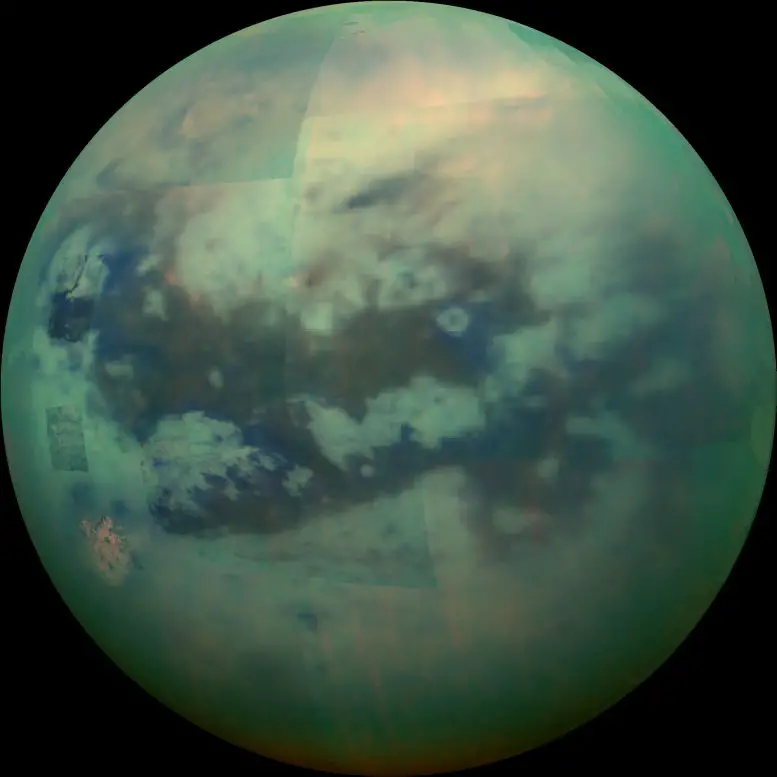
"This composite image shows an infrared view of Saturn’s moon Titan from NASA’s Cassini spacecraft, acquired during the mission’s “T-114” flyby on November 13, 2015. Titan has lakes and rivers on its surface, but they are made out of methane and ethane. Credit: NASA" (ScitechDaily.com/We Asked a NASA Scientist: Are There Rivers and Lakes on Other Worlds?)


When we describe the river as the flow of liquid and the lake as a small place where is liquid, we must say that rivers and lakes might be quite usual in the universe. 

As an example, the Sarurn's giant moon Titan has lakes and rivers on its surface. But there is no water in those lakes and rivers. There are hydrocarbon oceans with extremely cold methane and ethane. Weak gravitation is also one reason why methane stays liquid on the Titan moon. 

The temperature on that moon is -179 degrees Celsius. Tidal forces keep methane moving. But the melting point of that gas is -182 degrees Celsius. And that means methane can exist at least on a larger planet's equatorial area. 

Along with weak gravitation on Titan's surface, Saturn's tidal forces affect those gasses. The tidal effect of a giant planet is much stronger than the tidal effect that our moon forms. And that keeps methane moving. The same tidal force keeps oceans liquid under the icy shell of Enceladus. 

Weak gravitation and massive tidal forces make it possible that some planets or their moons can have liquid water far below zero Celsius. In that case distance to the center star must be far enough that the solar wind doesn't blow the atmosphere away. 

The greenhouse effect and Saturnian tidal forces keep the temperature on Titan so high, that liquid methane can exist. 

The melting point of methane is only three degrees higher than Titan's surface temperature. And that means methane can exist at the poles and nightside of that moon. But Saturn's tidal forces and weak gravitation allow that methane is moving. 

But in freezing words far away from their central star can be oceans and rivers where liquid gasses like liquid nitrogen and even liquid helium flow. 

And oppositely thinking there are worlds where melted lava forms rivers and lakes. Those planets can be so close to their central star that it melts their hemisphere. 


https://scitechdaily.com/we-asked-a-nasa-scientist-are-there-rivers-and-lakes-on-other-worlds/

https://en.wikipedia.org/wiki/Ethane

https://en.wikipedia.org/wiki/Methane


https://en.wikipedia.org/wiki/Titan_(moon)


https://astronomyandtechnology.blogspot.com/


Friday, February 17, 2023

Mysterious kilonova formed a symmetrical sphere.


In some models, the anti-electrons or positrons can cover the entire neutron star. And that forms the situation where an energy blast hits to neutron star around it. That form a similar effect to an implosion (nuclear) bomb. The energy travels in the middle of the neutron star. And then that energy impulse reflects from the nucleus back to the surface. 

The term kilonova means colliding neutron stars. The mysterious thing about that new kilonova is that the collision created a fully symmetrical sphere. For a symmetrical sphere's forming, the energy impulse should come from the middle of the neutron star. The thing that forms the sphere are neutrons that turn the same poles outward. 

That causes an energy impulse that forms a symmetrical shockwave outside the neutron star. But the question is how the energy impulse comes from the middle of the neutron star or the middle of the kilonova. There is the possibility that just when neutron stars collide between them travels the neutrino beam. So the origin of the symmetrical energy field could be a neutrino beam. In some other ideas, some planets would get between colliding neutron stars. 

In some models, the neutron stars form neutron liquid between them just before they impact. And when those neutron liquids impact they send an extremely powerful energy impulse. The reason for that is neutrons impact together opposite poles towards each other. That causes a powerful electric arc because the magnetic fields of the neutron stars are closing the circuit. 

The thing that forms a pure sphere is the impact that happens symmetrically around the neutron star. The particles must cover the entire neutron star and send the energy burst precisely at the same time. So that the symmetrical sphere can form. 

When we think about the formation of the symmetrical sphere there must be some kind of reaction that covers the entire neutron star. Then the energy travels in that neutron formation. When the energy reaches the nucleus of the neutron star it reflects its shell. The reason for that could be antineutron that impacts with a neutron. When an antineutron faces a neutron that forms the annihilation. 

That annihilation causes resonation in other neutrons. Then energy travels through the shell of a neutron star. That can form a situation where the energy travels to neutrons which the quark structure is laying. When energy travels quarks turn their tip inside the neutron star. In each neutron are three quarks And when one of them is heading in some direction. That forms the antenna that aims for energy to the middle of the neutron star. 

The idea is that free energy causes the situation. The neutron star is an extremely thick object. And there is not very much space for free energy. But the thing that denies the detonation of the neutron star is massive gravitation. There is a possibility that fast spin and some impacts send the neutron dust around the neutron star.

That neutron star sends pure sphere-shaped energy impulses. When energy reflects from a neutron star's nucleus it turns those neutrons around. That thing loads more energy into those neutrons. 

But the more practical explanation is that tidal forces rip another neutron star in pieces. In that case, the neutron star turns to neutron dust that falls on the object. That neutron dust formed in a kilonova. If a neutron cloud impacts symmetrically to the shell of a neutron star. That can explain a symmetrical sphere. 

The fact is that it's possible that this kind of bubble can also form if some kind of cloud impacts symmetrically to the neutron star. The symmetrical impact explains the symmetrical sphere around the kilonova. But then the question is where are those particles that cause the radiation come from, are they remnants of some planet? Or are they neutrons, that are released when another neutron star rips in pieces?  How can debris cover an entire neutron star before it sends a radiation burst? 


https://scitechdaily.com/astrophysicists-discover-a-mysterious-perfect-explosion-in-space-it-makes-no-sense/

https://astronomyandtechnology.blogspot.com/

The new hypothetical quantum engines and warp bubbles are the ultimate combination.


Wigner crystals can make even interstellar flight possible.  


When we think about the crafts that are mysteriously levitating over the ground we can think of situations in which the craft's body is in extremely low temperatures. And then laser ray will warm the ground under the craft. That thing can make the craft levitate. Because energy travels to the craft at an extremely high speed. 

In some other versions, the system uses superpositioned and entangled particles. Particles below the craft are at higher energy levels than particles in the engine. And that makes the quantum entanglement pull energy to the craft. 

Wigner crystals or fullerene balls where electrons are trapped can form symmetrical, sphere-looking energy impulses. If the graphene is formed in a Wigner crystal. There is a possibility that some engine has two layers of Wigner crystals. In those graphene layers is the superpositioned and entangled electrons. Those superpositioned and entangled electrons can send energy back from the system. If those layers are spherical that forms the ball-shaped power field. 


The internally installed fullerene balls can create a symmetrical sphere-shaped energy impulse


That means two graphene layers where electrons are trapped can use to make a new type of engine. In that engine, the system will put electrons trapped in those two graphene layers to superposition and entanglement. When the energy level of another electron layer is higher that thing makes energy flow to the side of the system where the energy level is lower. 

The mysterious sphere formed in the kilonova collision causes discussion. And interesting ideas. A spherical form of energy impulse can form a warp bubble. The mystery is why that kilonova formed a spherical energy impulse. 

Could there be some kind of phenomenon where a neutron star captures lots of electrons on its shell? If those electrons turn to positrons and then another electron hits them at the same time. That can form a pure spherical energy impulse. 

The fact about antimatter is that only mirror particles annihilate. The anti-electrons and neutrons can touch. So that thing can form a symmetrical energy impulse that travels inside the neutron star and then jump back from its nucleus. 


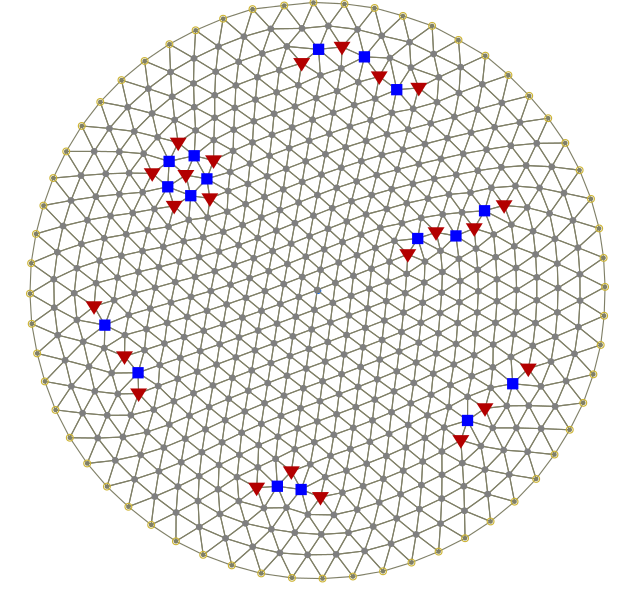
Wigner crystal. "Structure of a two-dimensional Wigner crystal in a parabolic potential trap with 600 electrons. Triangles and squares mark positions of the topological defects".(Wikipedia/Wigner Crystal)

Wigner crystal can be made by using graphene. 

The Wigner crystals can use for creating an absolute sphere-shaped energy impulse. And that thing can use for creating a warp bubble. 

In some ideas, the system can create warp bubbles by impacting neutrons. There is also the possibility that the fullerene can turn into an artificial Wigner crystal. 

In some models, the system creates a warp bubble by shooting positrons against the electrons trapped in the fullerene ball that turned into a Wigner crystal. That structure can form a pure spherical energy impulse. Because electrons are in Wigner crystals or fullerene balls. That system allows the creation pulsing warp field. or at least some kind of energy ball with a pure spherical form. 

Sometimes is introduced that those electrons can be replaced by using neutrons. But at this time, neutrons must anchor in that structure to the places where normally are electrons. And then, the neutrons will shoot to those neutrons that are in that crystal. 


https://en.wikipedia.org/wiki/Fullerene

https://en.wikipedia.org/wiki/Wigner_crystal


https://onlyimaginationlimitsinnovation.blogspot.com/

There is no "second law" of quantum entanglement.


There is no "second law" of quantum entanglement. 


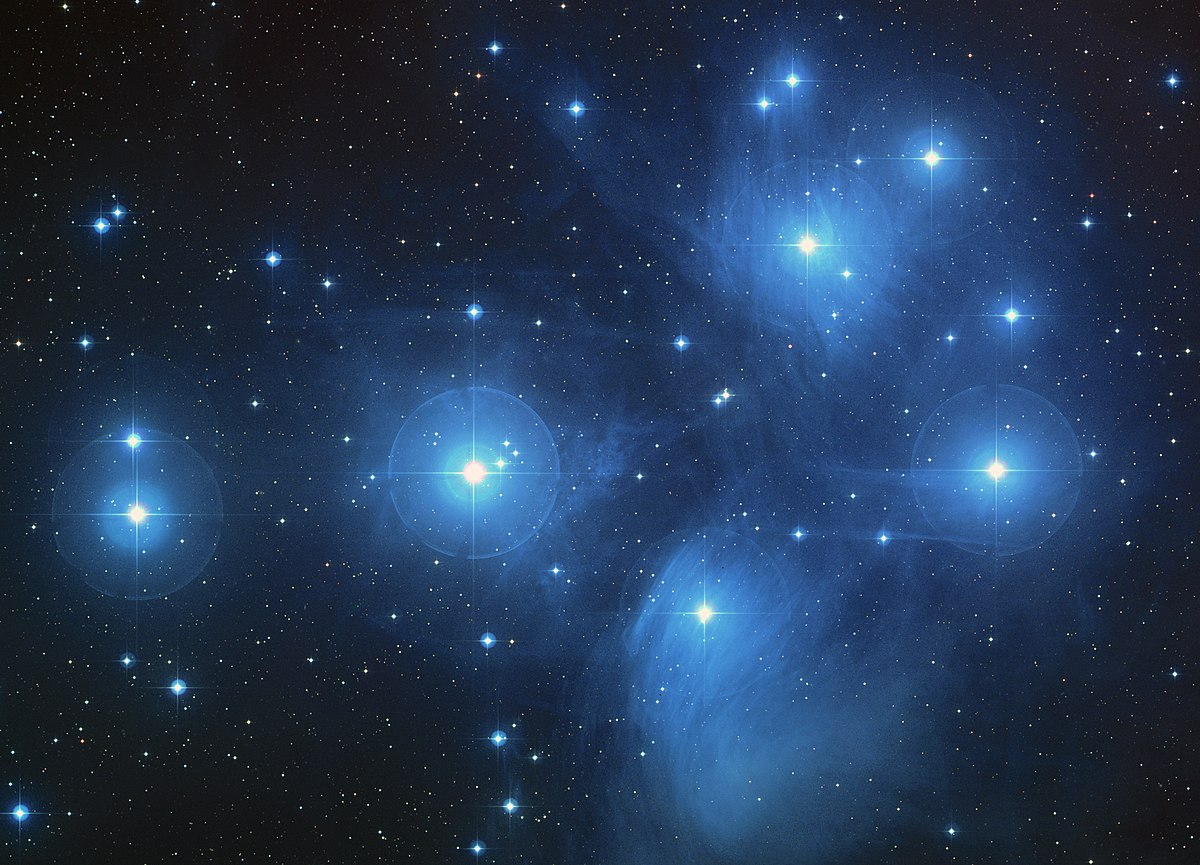
Above this text is an image of the Pleiades star cluster. That star cluster is one version of the system. 

In the quantum world, all systems' existence depends on other systems. In the matryoshka model, systems form internal entirety like matryoshka dolls.  The largest of known quantum systems is the Universe. 

And all other systems are its subsystems. Smaller or internal systems' existence is not possible without larger systems. And the term system means the group of actors. That observer can separate from another entirety.

If the larger system's existence ends. The smaller, or internal system tries to fill that hole. That thing is seen as energy flow. Energy always travels from the higher energy system to the lower energy system. If the existence of internal systems ends. Energy from a larger system tries to fill the place of an internal system. 

The biggest problem with thermodynamics in the quantum world is that all thermodynamic models require entropy. Entropy is the disorder level in the system. And the problem is that things like quantum entanglement happen between two elementary particles. 

Entropy in that kind of extremely simplified system is not possible. Or entropy is the oscillation between superstrings that form elementary particles. 

Literally: "Entropy is a scientific concept, as well as a measurable physical property, that is most commonly associated with a state of disorder, randomness, or uncertainty".  (Wikipedia/Entropy). 

Even if there is only a couple of visible actors in the system entropy can be high. Also, invisible actors are forming systems. That means on the quantum scale is very hard to detect all actors. 

But also, low entropy in a small number of actors forms a large effect. So entropy is the relative effect.  In one and two-actor systems. Entropy is impossible. But the fact is that it is very hard to find two actor systems. All things like magnetic fields and internal energy layers in particles are actors. And that's why all systems consist of more than one or two participants. 

Elementary particle's form is the whisk-looking structure of quantum skyrmions makes it possible that even if the system seems perfectly free from entropy there are still disorders that we cannot see. So the internal structure multiplies the number of actors even if we see only one actor. 

Attempting to use thermodynamic laws for extremely small objects is at least a very hard process. And today we know it's impossible to apply any common physics models to the quantum scale phenomenon. Researchers made thermodynamics for handling certain scale entireties. The scale of the systems that the creators of thermodynamics observed was much bigger than modern physics uses. And the data source was different. 

Thermodynamics and its four laws are made by using entireties like water tanks. Things like quantum entanglements are created between single elementary particles. The difference between elementary particles and water molecules is that elementary particles cannot break pieces like a water molecules. The energy travels in quantum entanglement like in the normal world. But a thing like superposition makes quantum entanglement and superposition different than the chemical compound called water. 

The superposition means that a particle can have multiple energy states at the same time. And if we think that the particle is like a whisk. And each of the wires is the energy string that model can explain the internal superposition of the elementary particle. In that model, each of those strings can have a different energy level. And that allows a single elementary particle can have an internal superposition. 

Or the oscillation of two different elementary particles can synchronize. And that means there is an energy flow between those particles. The requirement for that type of superposition is that the particles used in the superposition are identical. If we want to superposition the neutron, we must put two neutrons in the same position. And then superposition those quarks separately. 

Thermodynamics is a good tool for researching entireties. But the key element in all thermodynamic laws is entropy. Entropy means the level of disorder in the system. The source of entropy also means something. The outcoming energy removes entropy, but things like energy whirls and standing waves increase entropy. And entropy is that thing that destroys the system. 

But entropy plays a big role in thermodynamics. And that is the weakness in thermodynamics when we want to apply that model in the quantum world. Because things like superpositions and other quantum-scale phenomena are made between single elementary particles or can happen in the whisk-looking formation where disorder is limited that means it's impossible to use thermodynamics for modeling quantum-scale phenomena. 


https://scitechdaily.com/scientists-prove-that-there-is-no-second-law-of-entanglement/


https://en.wikipedia.org/wiki/Entropy


https://en.wikipedia.org/wiki/Thermodynamics


Thursday, February 16, 2023

Planet nine, stealth technology, electromagnetic explosives, and laser rockets are fascinating combinations.


Planet nine could be a stealth planet. 


There is the possibility that Planet X or the mythic ninth planet is invisible. Because around that planet is a thin hydrogen layer. When weak solar radiation hits those hydrogen atoms. They will turn their electrons against solar radiation.

 So solar radiation causes a situation in that the hydrogen atoms send wave movement that turns sunlight to travel past that hypothetical planet. In that case, the planet is invisible. There is a possibility that planet X's surface temperature is the same as its environment. 

That means there is no energy exchange between that planet and its environment. That makes this object extremely hard to detect. And that means the hypothetical planet X is a stealth planet. Even if the energy that impacts its dayside rises. Planet X's temperature is a little bit higher than its environment so energy travels to nightside. 

And that means we cannot see that hypothetical planet if it exists. The reason, why Planet 9 interests researchers are that the phenomenon that makes it invisible also interests stealth researchers. 


2A


2B


2C


2D

Images from the top. 

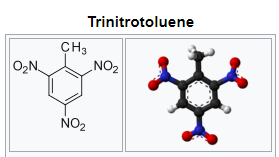
Image 2A: TNT molecule. 

Image 2B: RDX molecule. 

Image 2C: 2D water molecules. (Left image)

Image 2C Graphene


2D materials, like fullerene and graphene, make next-generation explosives and rocket engines possible.

When we think about the graphene's molecular structure and 2D  water molecule network. That form is similar to the carbon or hydrogen ring in the TNT and RDX. So it's possible just to send electromagnetic radiation to fullerene and 2D water. 

That thing creates a situation where energy forms a standing wave in the middle of the ring. And when energy starts to reflect. That thing causes reflecting waves in the structure. So that structure makes EM explosives possible.

Fullerene and graphene are fascinating materials. Those materials can use in many systems. And one of those systems is the stealth-systems. There is the possibility that the system anchors electrons in the middle of the graphene structure. And then energy will conduct to that graphene structure. 

When energy impacts those electrons they send counter photons against incoming radiation. That could make reflection weaker or deny the radiation impact with the layer. In that model, the hydrogen atoms could anchor in the middle of the graphene layer. The electron would be outwards. And then, the proton will shoot energy impulses. That removes energy from incoming radiation. And make reflection weaker. 


Nanomaterials are key elements in electromagnetic explosives. 


But the fullerene and graphene can make electromagnetic explosives and laser rockets possible. Nanotechnology makes explosives more accurate and powerful than ever before. 


When energy impacts graphene. That structure aims in the middle of the carbon rings. Then that radiation jumps back. And it acts like a carbon ring in the RDX. But in that case, the explosion is forming when the radiation energy impacts to graphene structure. The thing that makes gunpowder, TNT, and RDX (Hexogen) explosives are the carbon rings. 

When energy travels in those carbon rings they aim energy in the middle of those rings. And when the energy level turns high enough. It suddenly breaks that ring. That releases lots of energy. When the energy pump to those rings starts, it forms a standing wave movement. When the energy pump continues. It rises the energy level in that standing wave movement. 

Also, energy pumping keeps the carbon ring or ball in form. When energy pumping ends . The pressure difference between in and outside the ring rises. And then outcoming energy destroys the structure and releases more energy stored in those chemical bonds. 

But what if you will aim the laser ray at the fullerene? Fulleren is a ball-shaped carbon moelcule. When radiation hits fullerene. It will aim for energy in the middle of it. Also energy level between those carbon atoms starts to rise. That breaks the fullerene ball, and in that case, the energy stored in the fullerene is released. So the fullerene acts like a vacuum bomb. 

When energy jumps out from the middle of the carbon ball it touches the energy strings that travel between carbon atoms. The system forms an extremely powerful energy impact. While the energy that the laser pumps to fullerene is released. 

That thing makes it possible to use fullerene as the booster in electromagnetic rocket engines. The system sprays fullerene balls in the microwave or laser ray. That electromagnetic radiation makes those fullerenes explode. That thing increases the power of electromagnetic rocket engines. 


https://scitechdaily.com/strange-new-form-of-ice-discovered-raises-many-questions-on-the-very-nature-of-liquid-water/


https://en.wikipedia.org/wiki/Fullerene


https://en.wikipedia.org/wiki/Graphene


https://en.wikipedia.org/wiki/Planet_Nine


https://en.wikipedia.org/wiki/RDX


https://en.wikipedia.org/wiki/TNT


https://likeinterstellartravelingandfuturism.blogspot.com/


Can the universe's shape explain dark matter?

If we think of visible matter, or the visible geometry of the universe, as a disk. Round plate or ball. Galaxies and most of its matter are ...